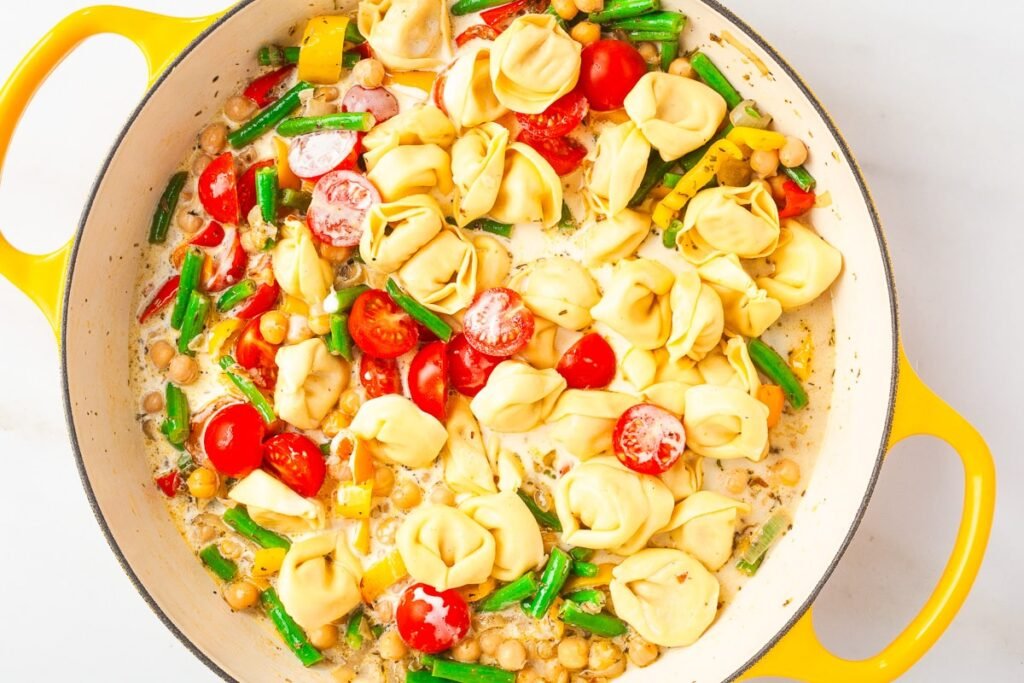
A tortellinatrice is a specialized pasta machine designed to automate the making of tortellini – the iconic ring-shaped stuffed pasta from Italy’s Emilia-Romagna region. It handles the steps that make tortellini so time-consuming by hand: rolling the dough, depositing filling, folding, sealing, and cutting – all in one continuous process.
Whether you run a busy restaurant, manage an artisanal pasta shop, or simply want to make fresh tortellini at home without spending hours at the kitchen table, this machine solves the same problem: speed and consistency without sacrificing quality.
Table of Contents
- What Is a Tortellinatrice?
- A Brief History
- How It Works: Step by Step
- Key Components
- Types of Tortellinatrice
- Benefits of Using One
- How To Choose the Right One
- How To Use and Maintain It
- Frequently Asked Questions
- Conclusion
What Is a Tortellinatrice?
The word comes directly from Italian. Tortellini is the pasta – small, ring-shaped, filled with meat, cheese, or vegetables. The suffix -trice is Italian for a machine or tool that performs a function. So a tortellinatrice is, literally, a tortellini-making machine.
The plural form in Italian is tortellinatrici.
It belongs to the broader category of filled pasta machines but is engineered specifically for the tortellini shape – the characteristic fold and ring that defines the pasta. Most models can also produce cappelletti, tortelloni, and other similar stuffed shapes using interchangeable molds.
A Brief History
Tortellini has been made by hand in Bologna and Modena since at least the 12th century. For hundreds of years, the process was entirely manual – skilled pasta makers (mostly women, known as sfogline) would roll dough by hand, cut it into squares, place filling, fold each piece, and press the edges into rings. A single skilled worker could produce a few hundred pieces per hour at most.
As restaurants and food businesses grew in the 20th century, demand for fresh pasta began to outpace what hand production could supply. Italian food technologists developed the first mechanical tortellini machines in the mid-1900s – large, factory-sized units initially. Over subsequent decades, smaller models were engineered for restaurants and artisan shops. Today, compact countertop versions are available for home use.
The machine did not replace the tradition. It extended its reach.
How It Works: Step by Step
The process inside a tortellinatrice mirrors the steps a human pasta maker would follow – just faster, more uniformly, and without fatigue.
Step 1 – Dough Sheeting Fresh pasta dough is fed into the machine’s rollers, which flatten it into a continuous thin sheet at a consistent, adjustable thickness. The quality of this sheet determines the texture of the finished pasta – too thin and the seal fails; too thick and the pasta turns doughy.
Step 2 – Filling Deposition A filling hopper deposits a measured, consistent portion of filling at regular intervals along the dough sheet. The filling can be meat, cheese, vegetables, or any combination – as long as the texture is smooth enough to feed through the dispensing system without tearing the dough.
Step 3 – Folding and Shaping Guides fold the dough around each portion of filling, and forming molds shape the characteristic tortellini curve – the bent ring that distinguishes this pasta from simpler stuffed squares.
Step 4 – Sealing Pressure points press the dough edges together, creating a firm seal that holds the filling in place during cooking. A well-sealed tortellino will not burst when dropped into boiling water or broth.
Step 5 – Cutting and Output Cutters separate each finished piece from the continuous dough sheet. The completed tortellini fall onto a tray, conveyor, or surface – ready to cook immediately, dry, or freeze.
The entire cycle takes seconds per piece. A mid-range commercial machine produces several hundred to over a thousand pieces per hour depending on model and settings.
Key Components
| Component | Function |
| Dough feeder / rollers | Sheets the pasta dough to a consistent thickness |
| Filling hopper | Holds and dispenses measured filling portions |
| Forming molds | Shapes the characteristic tortellini ring |
| Pressure sealing unit | Fuses the dough edges around the filling |
| Cutting mechanism | Separates individual pieces from the dough sheet |
| Output tray / conveyor | Collects finished tortellini |
| Adjustable settings | Controls thickness, fill weight, and piece size |
Quality machines use food-grade stainless steel throughout all food-contact components – essential for hygiene and compliance with food safety regulations.
Types of Tortellinatrice
There are three main categories, each suited to a different production environment:
Manual (Hand-Crank) Operated by hand rather than electricity. The user feeds dough and turns a crank to drive the process. These are compact, affordable, require no power source, and give the operator direct tactile control over the dough. Best suited to home use and small-batch artisan production. Output is lower, but the hands-on engagement appeals to pasta enthusiasts who value the craft element.
Semi-Automatic An electric motor drives the rollers and cutting mechanism while the operator feeds dough and monitors the process. This is the most practical choice for small restaurants and pasta shops producing daily batches – enough automation to significantly reduce labor, but without the cost and footprint of a fully automatic system.
Fully Automatic Industrial machines with continuous-feed systems, programmable digital controls, large-capacity hoppers, and high hourly output. Some advanced models include AI-assisted quality checks. These are designed for pasta factories, large catering operations, and food manufacturers supplying supermarkets. They require dedicated floor space, three-phase power in many cases, and more involved maintenance.
Benefits of Using One
Speed – A machine that produces hundreds of pieces per hour replaces what would otherwise require multiple skilled workers over many hours. For restaurants and food businesses, this directly affects labor costs and menu capacity.
Consistency – Every piece is identical in size, shape, filling weight, and seal quality. This matters for cooking – uniform tortellini cook evenly – and for presentation.
Reduced waste – Precise filling deposition and consistent dough thickness reduce the broken pieces, burst parcels, and discarded dough that are common in manual production.
Creativity – Interchangeable molds and adjustable settings allow producers to experiment with different pasta shapes, dough recipes, and filling combinations without starting from scratch.
Hygiene – Stainless steel food-contact surfaces are easier to clean and sanitize than the hands and tools of manual production.
How To Choose the Right One
Before comparing models or prices, answer three questions honestly:
1. How much do you actually need to produce? This is the most important factor. A home cook making tortellini for a family dinner needs a completely different machine from a restaurant serving 200 covers a night or a pasta factory supplying retail. Buying more capacity than you need wastes money and space. Underbuying creates bottlenecks.
| User Type | Recommended Type | Typical Output |
| Home cook / hobbyist | Manual countertop | 100–300 pieces/hour |
| Small restaurant / pasta shop | Semi-automatic | 300–800 pieces/hour |
| Large restaurant / catering | Fully automatic (small) | 800–2,000 pieces/hour |
| Pasta factory / food manufacturer | Fully automatic (industrial) | 2,000+ pieces/hour |
2. What is your space and power situation? Manual machines require no power and fit on any counter. Semi-automatic models need a standard outlet and reasonable counter space. Fully automatic industrial systems need dedicated floor space and may require a three-phase electrical supply. Measure before you buy.
3. What fillings will you use regularly? Most machines handle standard meat and cheese fillings without issue. If you plan to use chunky, wet, or unusual fillings, check the hopper specifications and cleaning access. Some machines are easier than others to switch between filling types quickly.
Other factors to evaluate:
- Build quality – Food-grade stainless steel throughout, not just on visible parts
- Ease of cleaning – Disassembly should be tool-free or near tool-free for daily cleaning
- Spare parts availability – Mechanical parts wear over time; buying a machine whose manufacturer has no spare parts network is a long-term risk
- Warranty and support – Commercial units should carry at least a one-year warranty with accessible technical support
How To Use and Maintain It
Before first use: Read the manufacturer’s manual fully. Assemble all food-contact parts and wash them before first use. Run a test batch with plain dough before using filling.
Dough preparation: Standard egg pasta dough – 100g flour to 1 egg – works well in most machines. Rest the dough for at least 20–30 minutes before feeding it through. Rested dough is more elastic, rolls more evenly, and seals better.
Filling preparation: Ensure filling is smooth in texture. Chunky or watery fillings can block the hopper or tear the dough sheet. If your filling is too wet, drain or reduce it before use.
Daily cleaning: Disassemble all food-contact components after every use. Wash with warm soapy water, rinse thoroughly, and allow to dry completely before reassembling. Dough hardens quickly – cleaning immediately after use is much easier than cleaning dried residue.
Periodic maintenance: Inspect rollers, sealing surfaces, and cutting edges regularly for wear. Apply food-grade lubricant to mechanical parts as specified by the manufacturer. Replace worn molds or sealing components before they affect product quality.
Frequently Asked Questions
What is a tortellinatrice used for?
It is a pasta machine specifically designed to make tortellini and similar stuffed pasta shapes. It automates the steps of rolling dough, depositing filling, folding, sealing, and cutting – producing consistent results much faster than hand production.
Can beginners use a tortellinatrice?
Yes. Manual and semi-automatic models are designed to be accessible to non-specialists. With proper dough and filling preparation and basic machine setup, a beginner can produce good results from the first batch.
What fillings can be used?
Any smooth-textured filling works well – classic combinations include pork and Parmigiano, ricotta and spinach, and pumpkin with nutmeg. Modern variations include seafood, truffle cream, and vegetable blends. The key requirement is a smooth, consistent texture that feeds cleanly through the hopper.
How do I clean a tortellinatrice?
Disassemble all food-contact parts immediately after use and wash them in warm soapy water. Do not allow dough or filling to dry on the machine – it becomes very difficult to remove. Most parts on quality machines are dishwasher safe; check manufacturer instructions.
How much does a tortellinatrice cost?
Manual home models start from around $50–$150. Semi-automatic restaurant models range from $500 to $3,000, depending on capacity and build quality. Fully automatic commercial systems range from $5,000 to $50,000 or more for industrial-grade machinery.
What is the plural of tortellinatrice?
The Italian plural is tortellinatrici. In English, both “tortellinatrici” and “tortellinatrices” are used, though the Italian plural is more common in culinary and food industry contexts.
Conclusion
A tortellinatrice is one of the most purposeful machines in a pasta kitchen – built to do one thing exceptionally well. It preserves the authenticity of a pasta tradition stretching back centuries while removing the bottleneck that made production at scale impossible without a team of skilled hands.
For home cooks, a manual model brings restaurant-quality tortellini to the family table on a weeknight. For restaurant kitchens and pasta shops, a semi-automatic machine transforms production capacity and consistency. For food manufacturers, industrial systems make the distribution of authentic fresh pasta worldwide a practical reality.
Choose the model that matches your honest production needs, invest in build quality, and maintain it properly – and a well-chosen machine will produce perfect tortellini for years.
Published by WordNest Editorial Team